Why the Most Likely F1 Winner Isn’t Always the Best Bet
In the high-octane world of Formula 1 betting, picking the driver who looks most likely to win a race might seem the obvious way to go. After all, betting on the favourite feels intuitive. However, as any seasoned bettor knows, the shortest odds are not motorsportweek.com always the most profitable choice. Understanding value betting F1, grasping the nuances of implied probability betting, and timing your moves according to the weekend’s evolving data can spell the difference between losing your bankroll and hitting a long-term winner.
The Difference Between Prediction and Price
Before we dive deeper into strategy, it’s crucial to clarify the difference between a prediction and a price. A prediction is your estimation of a driver’s true chance of winning a race. Price—or odds—is the bookmaker’s way of representing the payout and implied probability of that outcome occurring.
For example, consider a driver listed at +500 early in the week. In decimal odds, that’s 6.00 (using the US to decimal conversion: +500 = 6.00), which implies an implied probability of roughly 16.7% (calculated as 1/6.00). You might believe, based on your own assessment, that the driver has a 25% chance to win. If so, the market price offers significant value.
Odds Decimal Odds Implied Probability (%) Your Predicted Chance (%) Value? +500 6.00 16.7% 25% Yes – you expect a better chance than the implied oddsYour goal as a bettor should always be to find opportunities where your predicted probability exceeds the bookmaker’s implied probability. In short, you want the market to underestimate a driver’s chances. Simply betting on the favourite because they have the shortest odds—and therefore the highest implied probability—is a losing strategy if the juice (bookmaker margin) is factored in and if the risk-return balance isn’t favourable.
Understanding Implied Probability and Value Betting F1
Implied probability is the bookmaker’s estimation of how likely a particular outcome is to happen, embedded in the odds they offer. To calculate it, you take the reciprocal of decimal odds:
Implied Probability = 1 / Decimal Odds
For example, decimal odds of 4.00 imply a 25% chance, while odds of 2.00 imply a 50% chance.
Value betting comes into play when your calculation of a driver’s chances exceeds the bookmaker’s implied probability. For instance, if the F1 market prices a driver at +500 (16.7%) but your analysis, inclusive of form, track, weather, long run pace, and team updates, suggests the real probability might be around 25%, you’ve found value.
Over time, consistently identifying and betting on such value opportunities is the disciplined way to produce profits. It’s a simple idea, but hard in practice, especially in F1 where variables shift quickly throughout a weekend.
Information Checkpoints Across an F1 Weekend
One key to understanding when to place your bets—and which bets to skip—is to monitor how information and odds evolve across the F1 race weekend. Here are the critical checkpoints where new and often market-moving data emerges:
- Early Week Opening Odds: Bookmakers release initial prices based on form, historical track data, and driver championship dynamics. At this point, the odds often reflect broad consensus but lack weekend-specific information.
- Free Practice Sessions (FP1, FP2): Observing long-run pace, fuel loads, tyre behaviour, and upgrades can shift your view on who has race-winning potential. Weather forecasts also become clearer.
- Qualifying (Q1, Q2, Q3): Qualifying performance typically has a meaningful impact on final race odds. A driver unexpectedly securing pole or missing the top-10 can prompt substantial price adjustments.
- Pre-race Build-up and Withdrawals: Technical issues, driver fitness, penalties, or strategy announcements just before the race can further refine the betting market.
As a bettor, patience here is a virtue. By keeping a simple odds log from Monday open to race start, you can see where prices have moved, know when the market is overreacting or holding value, and avoid chasing favourites when the odds no longer make sense.
Qualifying’s Impact on F1 Betting Odds
Qualifying is often the biggest single factor changing the complexion of the betting market. Starting position correlates strongly with race finishing positions, so a driver’s qualifying performance will typically be reflected in shorter or longer odds.
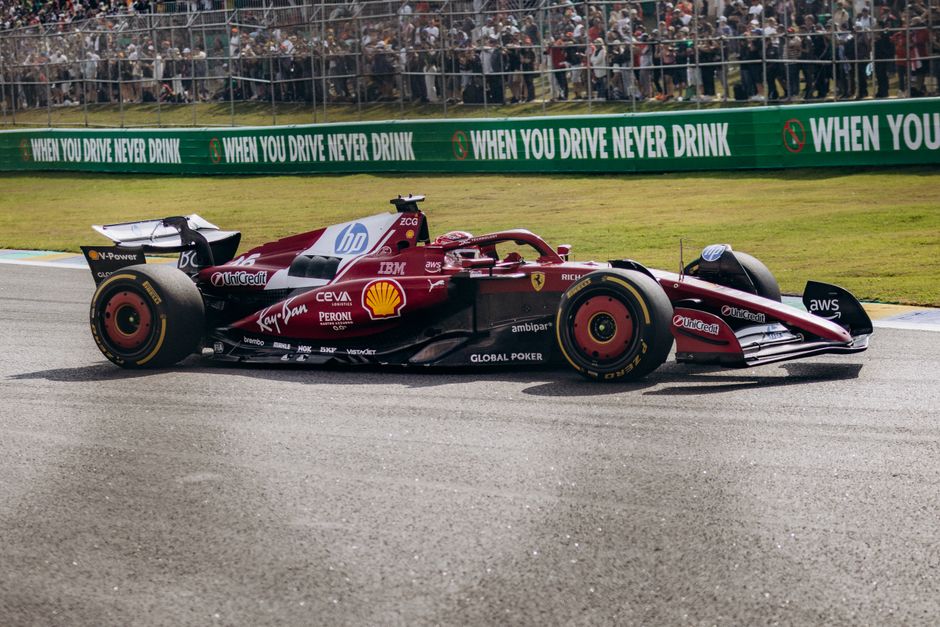
However, it’s essential to sanity-check implied probability after qualifying:
- If the market heavily favours a pole sitter (e.g., odds shortening from +500 early week to +200 post-qualifying), you must assess whether their winning chances truly justify this implied probability jump (~33% chance at +200 decimal odds).
- A favourite’s odds might shorten on pure position alone, even if long-run race pace was only average in practice. In such cases, the price may not offer real value.
- Conversely, a driver qualifying lower might see odds drift out, but if your analysis of race pace, tyre strategy, and overtaking opportunities indicates better chances, value could exist in taking the odds despite the starting position deficit.
Why The Favourite Isn’t Always The Best Bet
Take the example of the morning line favourite whose odds start at +500 early in the week. This price reflects their perceived chance pre-weekend, often formed by recent performance and championship context.
As the weekend progresses:
- The odds may shorten if qualifying confirms their presence at the front. However, this reduction diminishes the implied profit margin on your wager.
- If the car struggles in long runs or weather conditions change unfavourably, the favourite’s real chance may shrink, even though their odds aren’t reflecting it immediately.
- Other drivers’ odds could drift unjustifiably, opening opportunities for value bets elsewhere.
Blindly backing the favourite ignores these nuances and often leads to “chasing” a price that no longer represents value. Betting is not a popularity contest; it’s risk versus reward and probability versus payoff.
Putting It All Together: A Smart F1 Betting Approach
Here’s a step-by-step summary to improve your betting approach and avoid the trap of simply backing the most likely winner:
- Start Early But Don’t Commit Early: Record early week odds and your initial probability assessments, but keep an open mind as the weekend unfolds.
- Monitor Practice Data: Focus on long run pace simulation times and tyre management rather than just single best laps.
- Watch Market Reactions to Qualifying: Check if odds moves align with realistic shifts in probability, or if the market is over- or under-reacting.
- Calculate Implied Probability at Every Stage: Ensure that the price you get exceeds your probability estimate before placing a bet.
- Be Prepared to Skip the Favourite: If the favourite’s odds become too short to represent value, don’t bet just for the sake of betting.
- Look for Value in the Field: Sometimes longer odds on drivers outside the immediate favourites show profitable edges.
Conclusion
In F1 betting, the driver deemed “most likely to win” by the market is rarely the best bet purely because of their perceived likelihood. Instead, success comes from understanding and exploiting the gaps between your probability predictions and bookmaker odds—that is, finding value betting F1. Always sanity-check implied probability betting calculations, track the evolution of F1 betting odds throughout the weekend, and never be afraid to skip a favourite if their price loses appeal.
Remember, profitable F1 betting is a marathon, not a sprint. With patience, discipline, and careful consideration of all data checkpoints, you will be far better equipped to make smart, value-driven bets rather than chasing the shortest odds blindly.